 The County of Orange’s Fiscal Year (FY) 2026-27 Recommended Budget has been released for review by the Board of Supervisors and the public. It is available online at
 LET’S COME TOGETHER AT OC BOARD of SUPERVISORS BUDGET HEARING
DAY: Tuesday
DATE: June 9th
LOCATION: 400 W. Civic Center Drive – Santa Ana – 92701
TIME: 9:30am – (please gather outside, in front of the building entrance between 8:30am – 9:00am so we can meet and fill-out speaker cards before we go inside. There is no dress code but feel free to wear any of your groups identification…some of HHROC will be wearing our yellow t-shirts.)
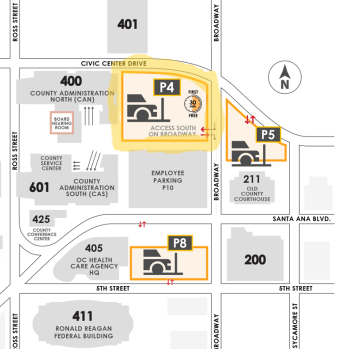
PARKING: FREE WITH VALIDATION – Park at the county’s P4 parking lot located at: 630 N Broadway Street – Santa Ana – 92701
(Bring your parking stub to the meeting lobby for your FREE PARKING VALIDATION ticket.)
A HEARING PACKET FOR THE ORANGE COUNTY F26-27 BUDGET
Prepared 2026-06-04 for Housing is a Human Right OC & People’s Budget OC coalition advocates. Every figure is shown two ways — Total Budget and Net County Cost (NCC). Numbered sources are at the end.
This is a choice, not a cut. The county will tell you money is tight. It isn’t. Operating revenue is up $794 million — nearly 10% over last year; the headline “cut” is only $253 million (2.3%) and falls almost entirely on reserves and financing, not services. Meanwhile every one of the county’s major new construction projects is carceral — a juvenile corrections campus and two reentry centers, $112 million in this budget (and $283 million across the five-year capital plan) — with no comparable plan to build homes. Where the county puts its money, and what it chooses to build, is a choice the Board makes every year. This packet shows that choice, issue by issue — and what it could buy instead.
What “Net County Cost” means. NCC is the county’s own discretionary money — what the Board controls and can move. “Total Budget” includes state and federal money the county only passes through. Supervisors quote the big total; we lead with NCC and keep the total ready.
In community,
Housing is a Human Right OC & People’s Budget OC
OPTION 1
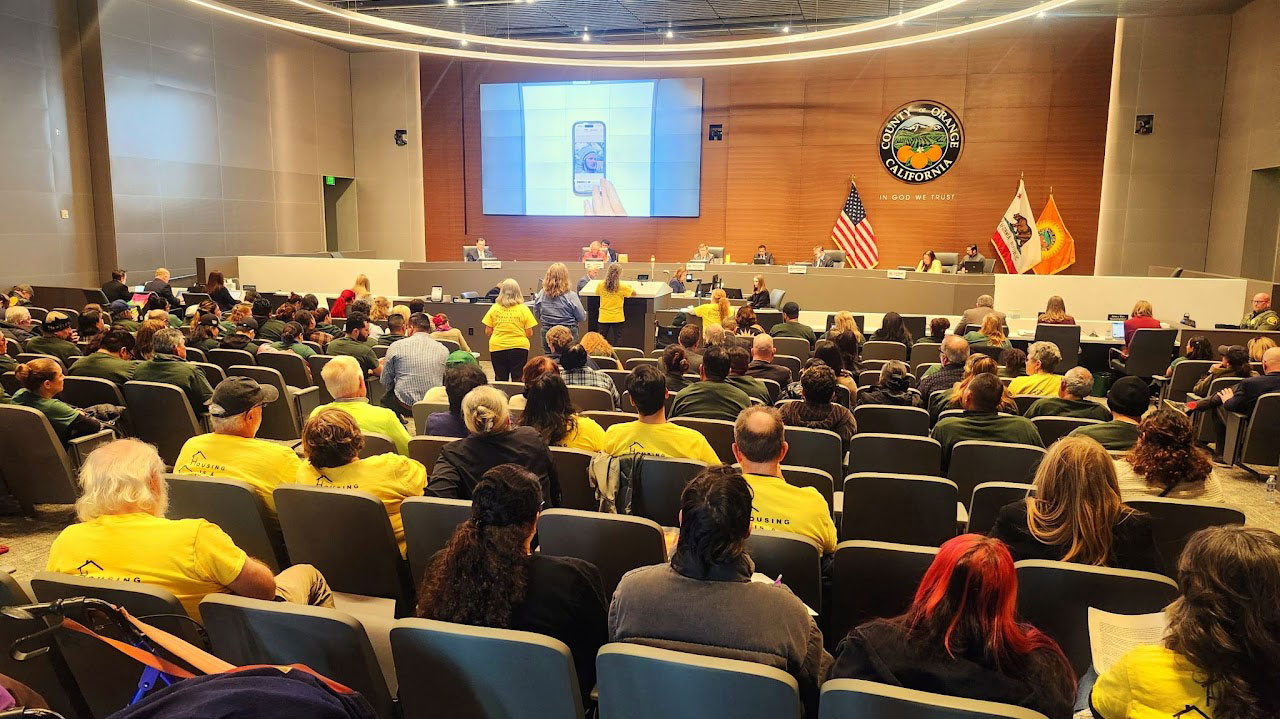
Attending the Board of Supervisors Budget Hearing Meeting
Let’s come together to provide our public comments during the OC Board of Supervisors Budget Hearing meeting.

OPTION 2
Email Your Comments to the Board of Supervisors
If you are unavailable to attend the OC Board of Supervisors Budget Hearing in person, you can still provide your public comment via email at: [email protected]
BUDGET HEARING PARTICIPATION TOOLKIT
Attending the June 9 Budget Hearing? Start Here.
If you are attending the June 9th Budget Hearing in person and plan to give a public comment(s) relating to the proposed budget FY2026/27, here is some helpful data.
Note: Public comments are generally 3 minutes; however, time might be cut to 2 minutes (or less) by the Board of Supervisor Chair.
Each section stands alone:
-
a headline
-
the numbers
-
a ~2-minute public-comment script to read
-
NOTE: about the spending…
-
(optional) – If you need some talking-points you can choose a sample script (1-6) and fill in your name and read your comments.
PUBLIC COMMENTS & TALKING POINTS
The Big Picture: County Priorities vs. the OC Residents
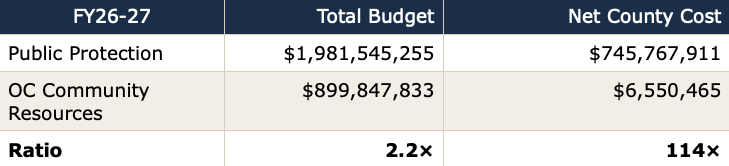
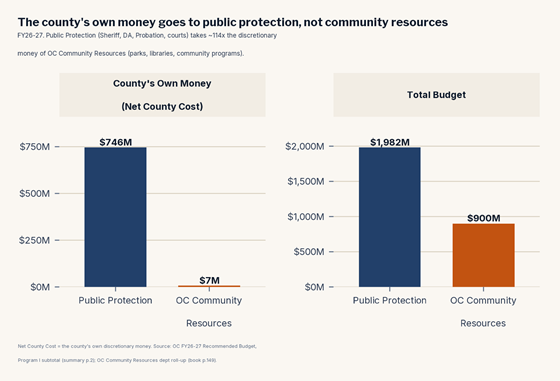
Of the money the Board actually controls, public protection gets $746 million and community resources get about $6.5 million — 114 to 1. Even the county’s own residents ranked public protection third — behind community services and infrastructure. The money goes the other way.
Sample script & talking points (~2 min):
My name is __________, and I’m here with Housing is a Human Right OC (optional).
A budget is widely considered a moral document because it should reflect the residents’ needs and values into actionable priorities and not the desires of the supervisors for reelection — it should be created to reflect “community” needs and values by where our tax dollars are prioritized and funded. So let’s look at where Orange County Supervisors actually put the money it actually controls.
- This year the county will spend about $746 million of its own discretionary dollars on public protection — the Sheriff, the DA, Probation, the courts.
- On community resources — the parks, the libraries, the community programs people actually use — it will spend about $6.5 million of its own money…That’s an unacceptable one hundred and fourteen to one in the use of our tax dollars.
And here’s the part that should bother every one of us: when the county surveyed over 750 of its own residents, we ranked public protection third — behind community services and infrastructure. The county asked us what we valued, we told them, and then the county did the opposite with our money.
(Don’t let them tell you the money isn’t there) County revenue is up almost ten percent this year — nearly $800 million more than last year. The only thing being cut is reserves and financing, not services.
This is a choice. The Supervisors were elected to make equitable choices. I’m asking you to make a responsible choice: move the county’s own dollars toward the things the county residents actually ranked first rather than neglecting the needs, values, and priorities of the residents.
NOTE: “Public safety is mandated.” → The service may be mandated; the spending level is not.
Housing vs. Jail
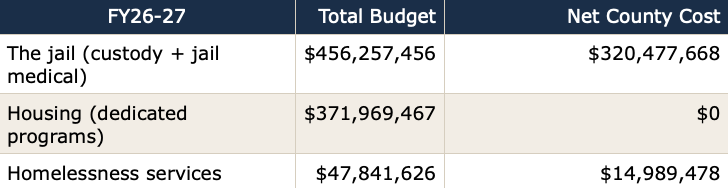
The county spends about $320 million of its own money on the jail and zero on its housing programs. And every major building it’s putting up is carceral — a juvenile corrections campus and two reentry centers, $112 million this year — with no currently existing comparable plan to build homes
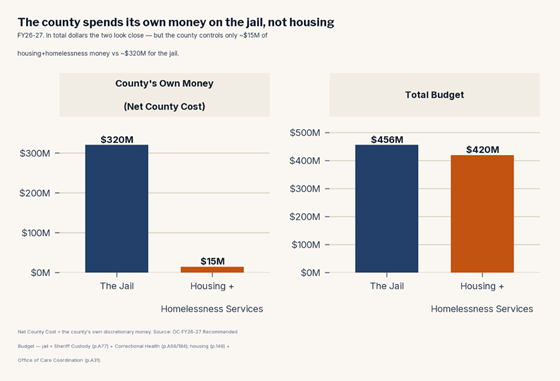
Opportunity cost. The $320 million of county money spent on the jail could instead fund roughly 14,500 housing vouchers for a year, or build about 490 permanent supportive homes. The $112 million going to new carceral construction this year could build about 170 supportive homes (≈430 over the full five-year plan). (Cost assumptions below in “Sources”.)
Sample script & talking points (~2 min):
My name is __________, and I’m here with/for __________.
I want to talk about the difference between what the county spends money on and what it spends its own money on — because with housing, that difference is everything.
This year Orange County commits about $320 million of its own money to the jail — running it, and the medical care for the people locked inside.² On its housing programs — the vouchers and the affordable-housing funds — it commits zero dollars of its own. Every dollar of that $372 million housing budget comes from Washington and Sacramento. The county just passes it through.
You’ll hear that the county spends over $400 million on housing and homelessness. In total dollars, that’s nearly true. But only about $15 million of it is the county’s own money — against $320 million for the jail.²
And look at what the county is building. Every one of its major new construction projects is carceral — a juvenile corrections campus and two reentry centers, $112 million in this budget alone. That same money could build more than 150 permanent supportive homes — and the full five-year plan, more than four hundred. The county is choosing to build cages, not homes.
The federal housing money keeping people housed today can be cut by Congress at any time. The county’s own money is the part the Board controls. Right now, for housing, that part is zero. Make it more than zero.
Note: If they deflect. “We spend $420M on housing and homelessness.” → Only ~$15M is county money; the rest is federal/state and at risk. “That’s the state’s job.” → Then why is the county’s own money building jails?
Homelessness
The county’s own office for ending homelessness runs on $15 million of county money — against $320 million for the jail. And the budget won’t even tell you how much goes to shelters or to the providers doing the work.

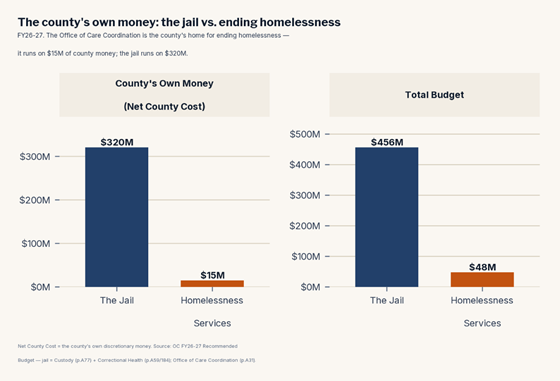
Opportunity cost. The county’s homelessness office spends about $45 million on services and contracts — but the budget never breaks out shelters or individual providers. For scale: the $320 million the county spends on the jail could approximately fund 10,000 shelter beds for a year.
Sample script & talking points (~2 min):
My name is __________, and I’m here with/for __________.
The Supervisors rhetoric says you’re committed to ending homelessness. The home for that work is the Office of Care Coordination. So let’s review how much of the county’s own money is goes there…it’s about $15Million.
For comparison, the county spends $320 million of its own money on the jail. That’s more than twenty dollars being spent on the jail vs. every one dollar of county money on ending homelessness.
It gets worse when you try to follow the money. That homelessness office spends about $45 million on services and supplies — the bucket that pays for shelters and contracts with the nonprofits doing the actual work. But nowhere in this entire budget does the county tell you how much goes to shelters, or which providers get what. It’s a black box of neglected data to hide the actual unjustified use of tax-payer funds…Didn’t a Supervisor recently go to prison for his corruption and failed transparency?
So I’m asking the Board for two things. First, put real county money — your own discretionary dollars — behind ending homelessness, at a level that reflects the crisis so hundreds of unhoused aren’t dying on the streets throughout Orange County annually. And second, be honest and transparent and show us the line items, in public meetings, for what the county actually pays for shelter beds and what it pays each homeless-services provider, so this community can actually hold you accountable for results and hold the service providers accountable for their results.
The jail’s budget is itemized down to the cell door. Homelessness deserves the same transparency and the public deserves to know the truth.
day can be cut by Congress at any time. The county’s own money is the part the Board controls. Right now, for housing, that part is zero. Make it more than zero.
Note: If they deflect. “We fund homelessness through many departments.” → Then publish the consolidated total and the provider contracts; right now it can’t be tracked.
Mental & Behavioral Health
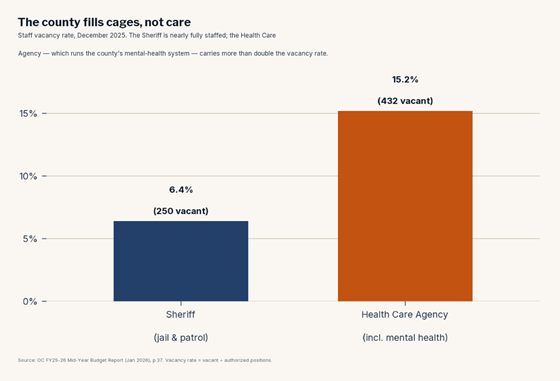
The county runs a $788 million behavioral-health system — almost none of it the county’s own money — and it can’t even staff it. The Health Care Agency sits at a 15.2% vacancy rate while the Sheriff is at 6.4%. The county funds filling cages, not healthcare.

Sample script & talking points (~2 min):
My name is __________, and I’m here with/for __________.
Orange County runs a behavioral-health system that spends nearly $788 million a year. That sounds like a serious commitment — until you ask two questions: whose money is it, and is anyone actually doing the work?
Almost none of that money is the county’s own. It’s state and federal dollars — including $272 million from the Behavioral Health Services Act that carries zero net county cost. Across its entire health agency, the county’s own discretionary money is about $111 million.
And here’s the part that tells you what the county really prioritizes: it can’t keep the jobs filled. As of last December, the Health Care Agency — the agency that runs our mental-health system — had a 15.2 percent vacancy rate, 432 empty positions. The Sheriff’s vacancy rate? 6.4 percent. The county uses our tax dollars to keeps the jail staffed, but it lets the community mental-health care go unstaffed.
When you don’t staff care, people in crisis end up in the one county system that is fully staffed — the jail. That’s not public safety. That’s a choice to criminalize an untreated illness for the purpose of social control.
I’m asking the Supervisors to put the county’s own money where its mouth is: immediately implement competitive pay and real staffing for behavioral health, so people get care before they get a cell. The public deserves better than you are prioritizing.
Note: If they deflect. “Behavioral health is fully funded at $788M.” → It’s state/federal money, and the county can’t staff it — funding on paper isn’t care in practice.
Immigrant Legal Defense
THE LINE. Search the entire $10.5 billion budget and you won’t find a single dollar — or even a mention — of immigrant legal defense. The county budgets to jail immigrants (federal SCAAP money) but nothing to defend them.
Sample script & talking points (~2 min):
My name is __________, and I’m here with/for __________.
I went looking in this $10.5 billion budget for what Orange County spends to defend its immigrant residents — legal representation for people facing detention and deportation. Do you know what I found? Nothing. Not a line item. Not a program. Not even a mention.
What I did find is this: the county receives federal money under a program called SCAAP — money tied to incarcerating undocumented people. So let’s be clear about what this budget says out loud. It has money for jailing immigrants. It doesn’t disclose and/or has no money — that anyone can find — for defending them.
Now, maybe the county will say it does fund some immigrant legal services, tucked inside a larger grant or contract. If so, that’s exactly the problem: it’s invisible. The public can’t see it, can’t track it, and can’t protect it when budgets get cut and it’s just another example of either ongoing corruption and/or a calculated effort by the county to lack transparency. Did Former Supervisor Andrew Do train the county how to hide line items from the public?
So my ask is simple and it’s a yes-or-no question for this Board. Does Orange County fund immigrant legal defense in this budget — yes or no? If yes, tell us exactly which budget unit it lives in, so we can see it and grow it. If no, then this Board should fund it and implement regulations for much better transparency.
People facing deportation apparently have no right to a free lawyer. It seems that whether they get one is a choice this county is unjustly and currently making by saying nothing within the budget. The public deserves to know the truth.
NOTE: If they deflect. “That’s a federal matter.” → Los Angeles County funds deportation defense from its own budget; it’s a local choice.
Community Programs
THE LINE. The county’s discretionary stake in “community services” is tiny — about $6.5 million across all of OC Community Resources, and only ~$4.2 million in the actual community-services programs. The lever for community investment is small, and it’s shrinking.

Sample script & talking points (~2 min):
My name is __________, and I’m here with/for __________.
When the county wants to look generous, it says it spends nearly $900 million on community resources. That number is real — but almost none of it is the county’s to direct. The parks run on park-district property taxes. The libraries run on library taxes. The housing money is federal. Strip all of that dedicated money away, and the county’s own discretionary stake in the entire county is about $6.5 million.
And the programs people usually mean by “community services” — Office on Aging, veterans’ services, workforce help, food and literacy programs — share an even smaller pool: about $4.2 million of county funds. That tiny number is what the Board actually decides each year for community programs.
This year that lever got smaller — community-resources net county cost fell about 12 percent.
So, when you hear “$900 million,” remember: the county’s real choice here is measured in a few million dollars, and it’s heading the wrong way. I’m asking the Supervisors to grow the discretionary investment in community programs — the Office on Aging, veterans, workforce, food security — because that handful of millions is where the county’s own values actually show. The residents across the county deserve better.
NOTE: If they deflect. “We spend $900M on community services.” → ~98% is dedicated revenue the Board can’t redirect; the county’s own choice is ~$6.5M, and it shrank this year.
COUNTY OF ORANGE RECOMMENDED BUDGET FY 2026-27
DEPARTMENT CONTACTS
As of 5/25/2026
https://cfo.oc.gov/budget#docaccess-40b32bcd1f0fbb85298f9213f5b6df47
OC BUDGET TERMS
Click here

To provide public feedback about the OC Recommended Budget FY2026/27: click here
Sources & notes
1. Big picture. Public Protection (Program I) $1,981,545,255 total / $745,767,911 NCC and Community Services (Program II) — see OC FY26-27 NCC Summary, summary p.2–3. OC Community Resources (dept 012): $899,847,833 total (book p.149) / $6,550,465 NCC (sum of the 20 OCCR member-unit NCCs). Residents’ priority survey: OC FY26-27 Budget at a Glance, p.5 (“Community Budget Priorities — Survey Results”), 758 responses. Program-area ranking (weighted): Community Services 308 (#1), Infrastructure & Environmental Resources 261 (#2), Public Protection 242 (#3), Insurance/Reserves & Misc. 190 (#4). (Embedded graphic; figures read from the chart.) Revenue up $794.3M / 9.8%: book p.23 (“Revenue sources total $8.9 billion, an increase of $794.3 million, or 9.8%, from the FY 2025-26 projections”). Budget decrease $253.2M: book p.30.
2. Housing vs. the jail. Jail NCC $320,477,668 = Custody $222,856,092 (book p.A77) + Correctional Health $97,621,576 (book p.A59); jail total $456,257,456 = Custody Total Requirements $305,322,271 (p.A77) + Correctional Health $150,935,185 (p.184). Housing (dedicated programs) $371,969,467 total (book p.149) / $0 NCC (all dedicated housing funds NCC $0, NCC Summary). Homelessness (018) $47,841,626 / $14,989,478 NCC (p.A31). Carceral capital — book capital schedule p.24 (PDF p.25), “2025 SFP Capital Improvement Plan – Non-General Fund,” OC Cares Capital Projects (narrative p.12). FY26-27: Workforce (Common Good) Reentry Center $40,000,000 + Juvenile Corrections Campus Phase 1 $35,719,036 + Phase 2 $33,660,760 + Coordinated Reentry Center $3,000,000 = $112,379,796 (OC Cares subtotal, FY26-27 column). Five-year total (FY26-27→FY30-31): $282,772,972. Funded from Non-General-Fund sources (OC Cares Fund 12M, Criminal Justice Facilities Fund 104, reserves) — not NCC; cited as construction priorities, not county discretionary money. Opportunity cost [EST]: voucher ≈ $22,000/yr (OC HUD Fair Market Rent; avg subsidy); permanent supportive unit ≈ $650,000 (CA/OC development cost). $320,477,668 ÷ $22,000 ≈ 14,567 vouchers/yr; ÷ $650,000 ≈ 493 units; carceral capital $112,379,796 ÷ $650,000 ≈ 173 units (FY26-27), $282,772,972 ÷ $650,000 ≈ 435 units (5-yr). Assumptions are estimates, stated so they can be checked.
3. Homelessness. Office of Care Coordination (unit 018): $47,841,626 total / $14,989,478 NCC; Services & Supplies $44,531,269 (the contract/shelter bucket) — book p.A31. The budget does not itemize shelter operations or individual provider contracts. Jail figures as in note 2. Opportunity cost [EST]: shelter bed ≈ $30,000/yr operating; $320,477,668 ÷ $30,000 ≈ 10,683 beds/yr. Estimate, stated.
4. Mental & behavioral health. HCA Behavioral Health Services $787,664,831 total (book p.184, HCA service-area table) — funded overwhelmingly by state/federal/realignment + BHSA; a per-area NCC split is an accounting artifact, so we cite the robust totals. BHSA fund (13Y) $271,895,000 / $0 NCC (book p.59, p.143). Health Care Agency total $1,216,757,861 / $111,093,443 NCC (book p.184, p.A57). Vacancies (Dec 2025): Health Care Agency 432 vacant / 15.2%; Sheriff 250 vacant / 6.4% — OC FY25-26 Mid-Year Budget Report (Jan 2026) p.37.
5. Immigrant legal defense. No immigrant legal-defense funding appears anywhere in the FY26-27 budget — broad search of all four documents (Padilla, immigr, legal aid/services/defense, removal, deportation, asylum, naturalization, undocumented, refugee). Immigration-adjacent only: a food-assistance program for families facing immigration challenges (book p.264) and SCAAP, federal reimbursement for incarcerating undocumented people (book p.122). County total budget $10,547,068,105 (NCC Summary). Los Angeles County funds deportation defense from its own budget (e.g., the LA County Office of Immigrant Affairs / Represent LA) — [EXT] context, not from the OC budget.
6. Community programs. OC Community Resources (dept 012) $899,847,833 total / $6,550,465 NCC (book p.149 + member-unit NCC sum). OC Community Services service area $55,241,251 / $4,171,353 NCC (book p.149 / appendix). NCC down ~12% year-over-year ([EXT] — analyst macro analysis, locked).
Method: NCC = the county’s own discretionary money (Board-controlled); Total Budget includes state/federal/dedicated revenue. Budget figures verbatim-checked against the FY26-27 PDFs on 2026-06-04; foundation checks (verify_foundation.py) pass 37/37. Opportunity-cost conversions are clearly-labeled [EST] ballparks. Full per-figure provenance: source-ledger.md.